
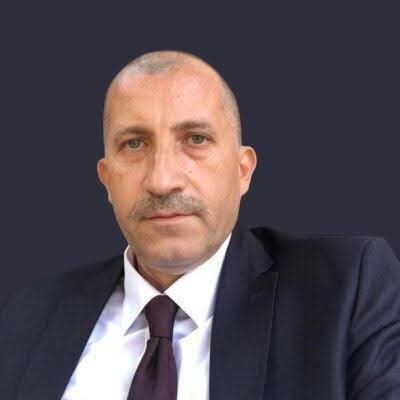
Selim Ibraimi- Senior officials from Kosovo and Serbia have exchanged harsh statements at the UN headquarters in New York. The accusations show that the two countries are far from any agreement.
Also at the last meeting at the UN, something else happened; representatives of the US and Great Britain supported Kosovo and demanded, to some extent, the removal of the UNMIK mission from Kosovo.
The US representative to the UN Security Council, Tammy Bruce, said that UNMIK has reached the end of the road. The conditions, the capabilities of the institutions and the presence of other actors all point to this.
“There is no justification for treating Kosovo in 2026 as if it were still Kosovo in 1999.”
Meanwhile, the UK representative to the UN, Jennifer MacNaughtan, said that the UK, as one of the first countries to recognise Kosovo’s independence, encourages those UN members that have not yet recognised it to join the majority.
“As the ICJ has made clear, Kosovo’s declaration of independence was not a breach of international law. The UK supports Kosovo’s Euro-Atlantic path as an inclusive and multi-ethnic democracy”.
“We call on Kosovo and Serbia to engage constructively through the EU-facilitated dialogue”.
“The Security Council must ensure that the UNMIK mission is agile, effective and relevant,, she said.
Kosovo Foreign Minister Glauk Konjufca also stated during the discussion at the UN Security Council that Belgrade must accept the new reality.
“We call on Serbia to face reality and recognise Kosovo as a sovereign and independent state, and not to hold its society and the entire region hostage to aspirations to regain regional hegemony.”
Against the US, Great Britain and Kosovo were Russia, China and Serbia.
Thus, the representative of Russia in the UN Security Council, Vasily Nebenzya, complained about the military initiative between Croatia, Albania and Kosovo, mentioning the ammunition factory in Kosovo.
Serbian Foreign Minister Marko Djuric further said that Serbs in Kosovo face discrimination. He warned of a “Serbian exodus.”
Despite the remarks of Washington and London regarding the UNMIK mission in Kosovo, China, Russia and Serbia were in favour of continuing the work of the international mission.
Peter Due, special representative and head of UNMIK, called for continued dialogue and confidence-building. Kosovo Foreign Minister Glauk Konjufca expressed reservations about the speech of the representative of the international mission.
He highlighted the poor performance of UNMIK in the negative coverage of the 2023 Banjska case.
The newspaper “PoliticoEurope” has reported that Serbia faces the loss of up to 1.5 billion euros in EU funds. The European Commission (EC) is considering the possibility of cutting off funding due to Serbia’s poor democratic progress and close ties with Russia.
The Foreign Secretary of Great Britain, Yvette Cooper, met with Kosovo Prime Minister Albin Kurti in London. Prime Minister Albin Kurti said during a conference held in London that Serbia maintains several dozen military bases near Kosovo.
“There is no reason to relax too much, because Serbia is a proxy of Russia, and there are 48 operational bases around the border of my country. All of them are in what is called the NATO security zone. The Kremlin has an office within the Serbian Ministry of Defence in Belgrade. The Regional Centres of “Russia Today” and “Sputnik” for the Balkans are also in Serbia,” he said.
Meanwhile, the EU Special Envoy for the Dialogue between Kosovo and Serbia, Peter Sorensen, met with Serbian President Aleksandar Vučić and Chief Negotiator Petar Petković to discuss the dialogue with Pristina.
President Vučić has stressed Serbia’s commitment to dialogue as the only sustainable path to resolving outstanding issues, including the formation of the Association of Serbian Municipalities (ASM). Kosovo and Serbia have been engaged in a dialogue process since 2013, but without concrete results.
The 2023 Ohrid Agreement between the two countries has not been fulfilled by Belgrade at any point.
Serbia is exerting pressure through the ethnic minority in Kosovo and lobbying to form the ASM.
EULEX (2008) and UNMIK (1999), despite criticism from member states and the Kosovar side itself, will continue their mission for a while.
On the other hand, the US thinks that some military bases in countries that do not support it in the war against Iran should remove personnel and military bases. The Balkans and some countries of the former communist bloc, including Kosovo, are among the countries where the US could re-establish bases.
Kosovo will have to use this opportunity to improve its international prestige.
The American and British support in New York was a moment that should be continued in Kosovo by strengthening institutions, continuing dialogue with local Serbs and ultimately reducing the influence of international missions.
To be clear, to reduce the influence of international governing bodies under UN Resolution 1244, Kosovo needs to work hard, including the government and the opposition.
The article was written specifically for Portalb.mk. The publication rights are only owned by Portalb.mk and the author, according to the agreement between them.
2026-04-12