
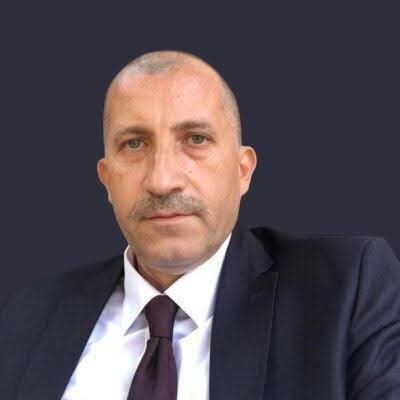
Selim Ibraimi- U.S. Ambassador to NATO Matthew G. Whitaker visited several Balkan countries to ensure cooperation and address security issues facing these fragile states.
While in the Balkans, the ambassador praised the governments for their good work and also paid attention to an issue of greatest concern to the US, particularly cooperation between the Serbian government and China. He said he was pleased with his meeting with Serbian President Aleksandar Vučić.
It was a constructive meeting with President Vučić on the start of a new era in U.S.-Serbia relations. “We value Serbia’s role in regional stability and look forward to the joint Serbia-NATO exercise in May. But I was clear: Serbia’s defense and security cooperation with unstable partners creates long-term strategic dependencies that are difficult to resolve and complicate future cooperation.”
“For a modern and visionary partnership, Serbia’s strategic future must be aligned with the West. Security depends on choosing the right partners.” He added that the constructive meetings in Belgrade focused on a new era for US-Serbia relations.
“As a trusted partner, we are building a visionary alliance focused on sustainable stability in the region. The US is planning to allocate an additional $1.5 million for demining, bringing the total to $28 million already invested.
Serbia has a crucial choice: a future of security and growth with the West,” said US Ambassador Whitaker.
Meanwhile, in Kosovo, during a meeting with KFOR and Kosovo government officials, the US ambassador praised KFOR and the government. He reiterated that for more than 26 years, the US has supported KFOR as a pillar of stability.
“I had an important meeting with Major General Ozkan Ulutas, Commander of KFOR, to discuss our mission in the Western Balkans.”
“We are Kosovo’s strongest partner, increasing the country’s ability to defend itself. While we call on allies to take greater responsibility for European security, KFOR remains critical for a secure and resilient region.”
He described the meetings in Pristina with acting President Albulena Haxhiu, Prime Minister Albin Kurti, and Defense Minister Ejup Maqedonci as very positive.
“Kosovo is growing as a contributor to security, from its role in the Peace Board to its planned contribution to the International Stabilization Force in Gaza.
I commend Kosovo’s commitment to providing the United States with defense items and its growing defense industrial base.”
“Stronger partners lead to a more secure future,” he said. In this context, the Parliament in Kosovo has approved Kosovo’s membership in the Peace Board.
During the Balkan tour, the Ambassador visited North Macedonia. He met with Prime Minister Hristijan Mickoski and senior officials from the Ministry of Defense. “I saw firsthand how North Macedonia continues to strengthen its defenses. From Strykers to JLTVs and Husky combat vehicles.”
“Their commitment to modernization with American weapons is impressive. We welcome the partnership with Prime Minister Mickoski and his team. As we move forward towards President Donald Trump’s 5% GDP target, North Macedonia is proving to be a reliable and willing partner,” he said.
In Montenegro, Ambassador Whitaker met with Montenegrin Prime Minister Milojko Spajic and Foreign Minister Ervin Ibrahimovic.
The US is Montenegro’s most important strategic partner. The Ambassador, during the meeting with officials in Podgorica, reiterated Montenegro’s intention to close all negotiation chapters to achieve full EU membership.
Ambassador Matthew G. Whitaker also held meetings in Croatia and Albania. In Tirana, he met with Prime Minister Edi Rama and the Minister of Defense.
Albania will host the NATO Summit in 2027. The US, despite its focus on Ukraine and the recent war in Iran, has not forgotten the Balkans.
Based on public data (CRSReport, Govinfo, Brookings, etc.), total US military spending in the Balkans since 1992 amounts to $30-35 billion, combining the $23.5 billion allocated by the US Congress for military operations in Bosnia and Herzegovina and Kosovo from fiscal year 1992 to fiscal year 2004, adding about $7-10 billion to ongoing KFOR spending.
The US has also allocated approximately 5-6 billion dollars in aid to the Balkans since 1992, mainly covering humanitarian aid, reconstruction of post-conflict areas, democratic institutions, media, civil society, etc. Meanwhile, the EU has also been helping the Balkans with many means for more than three decades.
The EU Growth Plan for the Balkans amounts to 6 billion euros. Despite the numbers, the US and the EU have been close to the region.
The latest statement by US Ambassador to NATO Whitaker can be described as an attempt to assess the capacities of the Balkan states, their promises to increase military budgets, their orientation, and, of course, security.
In a Facebook post by the US mission to NATO regarding the ambassador’s Balkan tour, it is stated that “by choosing American defense technology and taking more responsibility for their security, nations are overcoming past conflicts to maintain sustainable peace”.
The article was written specifically for Portalb.mk. The publication rights are only owned by Portalb.mk and the author, according to the agreement between them.