
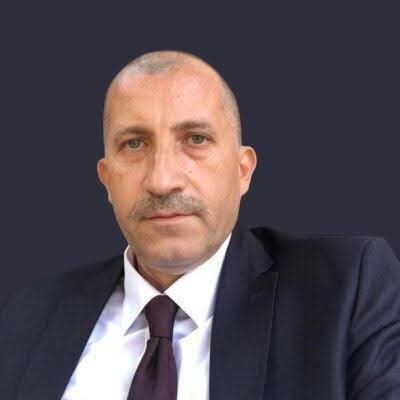
Selim Ibraimi- While everyone says that Russia has fallen and has no direct influence on the politics of the former Yugoslav sphere, the case of Slovenia, with the election of a new speaker of parliament with pro-Russian positions, proves that Russia is not sitting idly by. The election of the speaker of the Slovenian parliament, Zoran Stevanović, shows another side of Russian operations.
Russia’s “soft power” is still active and can change the course of debate and politics in the former Yugoslav sphere and much more.
The outbreak of the debate in Slovenia was welcomed in Serbia and in Russian circles, as support for Russia came from the Serbian minorities living in Slovenia.
It is acceptable that the influence is strong in Serbia, Republika Srpska, North Macedonia, and among the Serbs of Kosovo, but the appearance of such an influence in a country like Slovenia, which is geographically close to Italy and Austria with a consolidated democracy and anti-disinformation policies, was not so expected.
With the election of high-ranking officials, it is desired to change the policy of the countries with initiatives such as exiting NATO and other international organizations.
Slovenia, since 1945, although part of the former SFRY, has been one of the republics (states) with a pro-Western orientation.
No one expected that the good history of Slovenia would be tarnished by the recent statements of the new speaker of the parliament with pro-Russian and anti-Western convictions.
On April 10, the Slovenian parliament elected Zoran Stevanović, leader of the Truth party (Resni. ca), as speaker of parliament with 48 out of 90 votes.
Russian media described this as a hybrid victory for Russia, where, in addition to a significant presence in Austria, Moscow managed to reap success in Slovenia.
The unexpected election of Zoran Stevanović, a pro-Russian speaker of the Slovenian parliament, to head the country has raised concerns about Slovenian politicians’ ties to Moscow.
His party has supported the lifting of international sanctions against Russia and has even proposed a referendum on Slovenia’s withdrawal from NATO.
Parliament Speaker Zoran Stevanović said he plans to organize a referendum on Slovenia’s withdrawal from NATO.
Despite threats and attempts to turn the country against the EU, the speaker’s actions are seen as part of an anti-EU and anti-NATO spirit to form a new axis in Central Europe.
However, with Orban’s ouster in Hungary, such actions will not have much effect.
According to the press, the new president believes that Slovenia should pursue an independent policy and avoid involvement in international conflicts.
President Zoran Stevanović also said that he intends to travel to Moscow. He said that his position is not “pro-Russian”, but focused on Slovenia’s national interests.
Despite the statements of the new Slovenian president, no decision has yet been made on a referendum on Slovenia’s withdrawal from NATO.
Resni.ca and two other small parties, New Slovenia and the Democrats, together have 20 seats in the Slovenian parliament.
According to analysts, the aforementioned parties are expected to play a key role in forming a future governing coalition.
Slovenia, after seceding from the SFRY, established diplomatic relations with Russia in 1992.
Slovenia became a member of the EU and NATO in 2004.
The chances of leaving NATO are slim, but the sudden presence of the Russian narrative in Slovenia is raising new concerns about Russian operations in the ongoing process discussed in our previous articles.
Slovenia’s exit from NATO requires an initiative by 30 MPs, constitutional amendments, a consultative referendum, and approval by the Slovenian parliament.
Overall, leaving the alliance is a long process that is unlikely to be realized.
One thing remains in doubt: whether this influence was direct or is of the nature of Russian “soft power” influence.
In fact, it is a direct Russian entry by installing important political figures in high institutions that support Serbia and Russia. The Slovenian case is now different from the Russian influence in other parts of the Western Balkans.
Currently, both under the center-left government of Robert Golob and under the previous center-right governments of Janez Janša, official Ljubljana has supported several important EU and US processes, starting with Kosovo and most recently Ukraine.
Slovenia supported EU sanctions against Russia in 2022 and has been a constant active part of NATO missions.
After the March elections, a right-wing coalition government is expected to be formed, which means that Slovenia is entering a phase of ideological change. Russia, together with Serbia and hidden elements, has continued to pose obstacles in many regional processes.
The article was written specifically for Portalb.mk. The publication rights are only owned by Portalb.mk and the author, according to the agreement between them.