
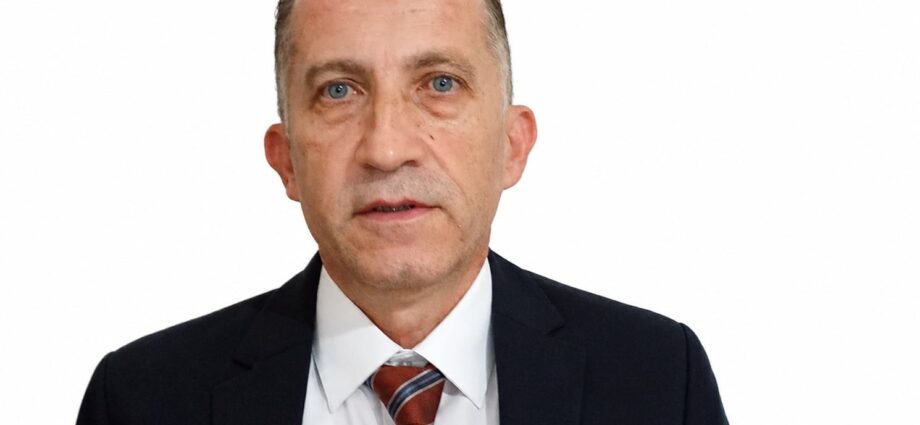
Selim Ibraimi- The European Commission’s (EC) efforts to push forward Serbia’s application to open another chapter have stalled, failing to gain the necessary support. The peculiarity of this move is that France, as Serbia’s ally and trading partner, proposed the idea, but the European Parliament (EP) has taken a different path. Eight EU countries were against the European Commission’s proposal, which was supported by Enlargement Commissioner Marta Kos, who said that Serbia has made positive steps and Belgrade should open the Chapters.
“EU enlargement is a strategic response to today’s geopolitical challenges. Serbia’s path to the EU is based on merit and depends on genuine reforms starting from strengthening the rule of law, democracy, media freedom, fundamental rights, good neighbourly relations, and alignment with the EU’s foreign and security policy. These are not just accession criteria. They are reforms that will strengthen Serbia and improve the lives of its citizens,” reads a post on X by the European People’s Party (EPP) group in the European Parliament.
Progress towards EU membership involves not only adopting reforms, but also implementing them fully and completely, MEPs explained in a report on Serbia adopted by the European Parliament on Wednesday with a majority of 468 votes.
“There is a persistent gap between Serbia’s legislative alignment with EU rules and the actual implementation of reforms that continues to undermine the country’s progress,” the report explains. MEPs also stressed that each country’s path towards EU integration should be assessed on its own merits. “No country should be tied to another or treated as part of a package,” the European Parliament’s latest statement underlined.
An unnecessary postponement of the agendas for rapid and undeserved entry of countries into the EU could bring new troubles to the union, as we have seen for years with the disagreements and obstacles from Hungary under the then government of Viktor Orbán.
In this regard, the former Polish ambassador to the Council of Europe, Urszula Gacek, said in a statement that Serbia in the EU would be a completely different game from Orbán’s. According to the former diplomat, this would not be lobbying for Russia, but rather for Russia to have a seat at the table.
Meanwhile, some time ago, at a parliamentary conference of EU candidate countries organized in Belgrade, Serbian President Aleksandar Vučić stated that one should not expect miracles in terms of EU enlargement in the coming years.
It was not long before Nemanja Starović, Serbia’s Minister for EU Integration, also made a statement, saying that the opening of the 3rd Group of EU Chapters has been long overdue.
If the 3rd Group were to be opened, this process would bring Serbia’s rules on cross-border services closer to the EU single market.
Chapter 3 also includes the recognition of professional diplomas, etc.
Marko Đurić, Serbia’s Foreign Minister, told the newspaper Politico that Serbia remains committed to pursuing further reforms.
“In the case of Serbia, enlargement is undoubtedly beneficial for both sides; it is an act of strategic foresight. One only has to look at the map.”
“Recently, we have taken important legislative and institutional steps to strengthen the rule of law, responding directly to the recommendations of the European Commission,” said Minister Djuric.
Despite the statements of Serbian officials, eight European countries that were against said they would continue to oppose offering new enlargement opportunities to Serbia in its current direction.
Senior officials of Serbia’s opponents said that opening a new chapter with Belgrade is unlikely to move forward anytime soon.
“Advancing the membership bid of a country that maintains close relations with Russia would send the wrong message.”
In the end, the Special Rapporteur on Serbia, the Croatian Tonino Picula, said: “My report concludes that Serbia’s EU accession process has effectively stalled, due to democratic backwardness, weakening of the rule of law, failure to implement key reforms, and lack of coherence with the EU’s foreign policy.
Despite the constant reaffirmation of its strategic commitment, Serbia’s political leadership has so far demonstrated limited political will to undertake reforms or to comply with the values and policies required for accession.”
In addition to its internal democratic setbacks, Serbia continues to keep the topic of military and administrative return to Kosovo a hot topic, promoting bad neighborly relations.
Belgrade will continue to play on this topic in the coming years, regardless of whether or not a new chapter with the EU is opened.
It must be said that Serbia has a larger GDP than the countries in the region, military power, and more capacity to develop trade with the world, thus leaving room for maneuver and expectations.
Serbia continues to cooperate with Russia, China, and the countries of the Middle East with a smart strategic approach.
So Belgrade officials act strategically. Croatian President Zoran Milanovic was also in this line, who, during a statement to the media, said that Serbian politicians are acting strategically.
President Milanovic also said that he had raised this problem during the NATO Summit in Turkey.
“I raised the issue of Serbia’s military reinforcement during the NATO Summit. Serbia is behaving strangely. The question is, what is the purpose of all this?”
Despite the concerns, Serbia continues to remain an ally and friend for some European countries and a danger for others for the union and the Western Balkans. Serbia has been a candidate country for the EU since 2012. Serbia has opened a total of 22 out of 35 chapters of EU accession, stalling in the most important parts, but without much concern for Belgrade officials. The EU has allocated significant financial resources to Serbia in several stages and areas.
The Serbian Ministry of European Integration reports that since 2000, the EU has provided, through various instruments and funds, more than 7 billion euros in grants to Serbia in order to support reforms.
The EU’s Growth Plan for the Western Balkans amounts to 6 billion euros. The EU recently proposed a gradual integration through a Franco-German project.
However, it seems that the remaining countries in the region are more interested in European taxpayers’ money than in reforms and EU integration.
The article was written specifically for Portalb.mk. The publication rights belong only to Portalb.mk and the author, according to the agreement between them.