
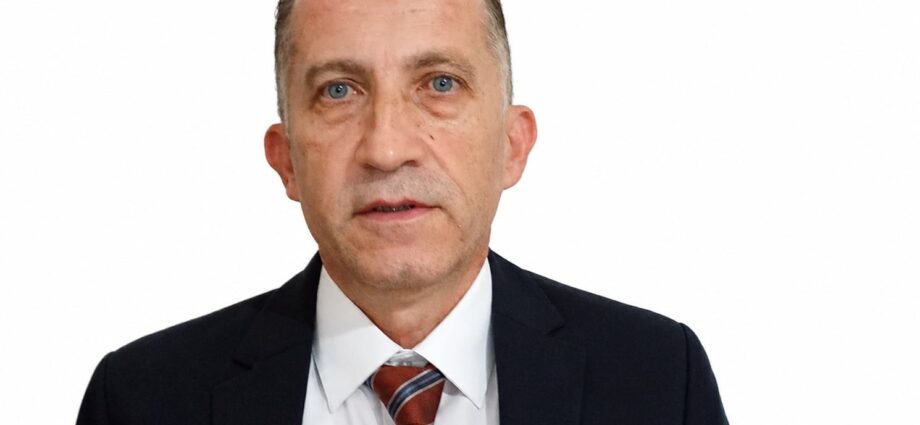
Selim Ibraimi- Bosnia and Herzegovina continues to remain in a difficult situation and political paralysis. Debates and disagreements between Americans and Europeans about who should lead the Office of the High Representative in Bosnia and Herzegovina (OHR) have put Bosnia in a difficult situation, without reason. There are many politics behind who will lead the Office of the High Representative.
The current German representative, Christian Schmidt, who left on July 1, 2026, has been criticized by the US and, in the file from the administration of President Donald Trump. The State Department, before the last meeting, had the man to appoint to the Office who has power. The interim discussions between the European members were not only about the name of the new man in this position.
European voices have reported on the economic plan to do a lot of business with the Federation of Bosnia and Herzegovina in the context of the US role in the region, with energy security. Thus, the US administration and Italy support the Italian diplomat Antonio Zanardi Landi. France and Germany come up with their own candidate, who did not receive a job from Washington and Rome.
According to the media, the European partners are accustomed to this American technology, being acquainted with the gas pipeline business in the establishment of an American company based in the US (AAFS Infrastructure and Energy). Analysts in the region say that this American change towards the High Representatives has to do with the Americans in the Balkans who seek reciprocity and not only assistance in establishing states, otherwise called “state construction in the open.”
Before Washington became more critical of Christian Schmidt, some factions in the Federation did not like him, especially the Serbs of the Srpska Republika, who were the most dissatisfied with his mandate. The US had emphasized that it is okay for Christian Schmidt to stay in office until October, when elections will be held in Bosnia and Herzegovina.
But this did not happen. Schmidt left office, leaving behind a rift. Despite intensive talks, US and EU officials failed to agree on the future of the High Representative for Bosnia and Herzegovina. Two days of talks in Sarajevo failed to move the issue forward.
In the end, the Peace Implementation Council (PIC) Board of Directors appointed Louis J. Crishock as his replacement, who will carry out the duties of the government under Annex 10 of the Dayton Agreement. Despite the preferences of the Americans and Europeans, the future of Bosnia and Herzegovina is at risk due to Serbian policies.
In the end, Bosnia and Herzegovina needs at least ten years to join the EU, if the EU is to show more to other Balkan countries that are blocked in this process. In the context of recent disagreements, the large involvement of the US also has real implications for whether the new deputy, Louis J. Crishock, will do more to combat the separatist tendencies of the Serbs and the abuse of power against former persons accused of war crimes.
It should be noted that the Office of the High Representative was established in 1995 with the Dayton Agreement. Despite the establishment of peace by the US, its European partners, and within its Russian home in Dej, Bosnia and Herzegovina has faced its own challenge. One should be wary of disagreements between the US and European states. The signals that convey disagreements between Washington and European states in the face of political extremism and bad influences in the republic remain to be determined by the decisions that will be made before or after the autumn elections.
The article was written specifically for Portalb.mk. The publication rights are only Portalb.mk and the author, according to their characteristics.