
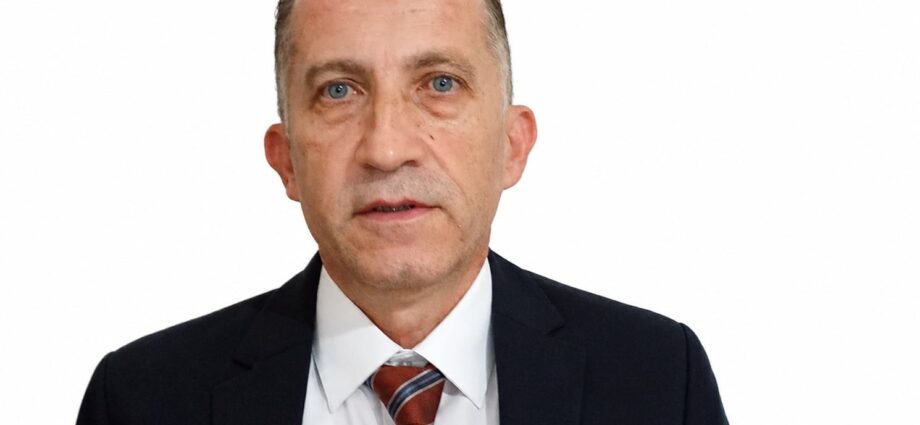
Selim Ibraimi- Ratko Mladić (1942-2026), the war criminal accused of killing thousands of Bosniaks during the 1992-95 Bosnian War, died on Thursday. His death brought to mind the wars in the former Yugoslavia and the deaths of over 100 thusands innocent citizens. His death as a war criminal in The Hague prison is an example of what today’s societies, after the wars in the Balkans, must do to prevent new conflicts and the rise of leaders who want to commit mass murders of other ethnic groups.
But it seems that the leaders and peoples of the Balkans have not learned from the recent wars. The echoes of Mladić’s murders are still felt today after he died in The Hague prison. What remains worrying is the continuation of the same policies with new and more advanced methods. It doesn’t take much research to see that in the last two decades there have been several governments in the Balkans that want to present and glorify the past as something great for their people.
After the publication of Mladić’s death, the media in Serbia, Republika Srpska, North Macedonia, and other regions paid special attention to it. How is it possible that a butcher of the type of Mladić, who observed the Siege of Sarajevo in 1992 and organized the mass killings in Srebrenica in July 1995, would ultimately emerge as a hero? The irony after the news of the death of the genocidaire Mladić continued with the statements of Serbian officials that he was killed intentionally and that they would bury him with all the state ceremonies.
Thus, the former ultranationalist leader of Republika Srpska, Milorad Dodik, wrote that his death is just a murder. “It is a murder. He was respected by the Serbian people. As a commander, he stood up to protect the Serbs.” Also, the former participant in the Yugoslav wars and radical and ultranationalist politician Vojislav Seselj said: “Mladić fought against those perpetrators for a long time; they were expecting his death two or three years ago, but he did not surrender… They killed him.” The Russian Foreign Ministry also reacted in this direction.
“The Russian side has repeatedly emphasized that Mladić’s trial in The Hague and the conditions of his imprisonment were accompanied by disregard for his fundamental rights, including the right to health and appropriate medical care.”
“The Mladić case, despite the basic factual circumstances, was a blatant manifestation of the court’s double standards and anti-Serb prejudice.” In addition, the Embassy of the Russian Federation in Serbia joined the same reaction. “In connection with the death of General Ratko Mladić, we express our sincere condolences to his family and relatives,” the Russian embassy in Belgrade said in a post.
Meanwhile, Albania made a different assessment. Albanian Foreign Minister Ferit Hoxha, in a post on the X network, said that Ratko Mladić is a brutal murderer, convicted of genocide, war crimes and crimes against humanity. “When announcing the life sentence, Alphons Orie, the presiding judge, said that Mladić’s crimes rank ‘among the most heinous known to humanity.’
“His political protector and architect of a large part of the Balkan tragedy, Slobodan Milosevic, died in The Hague without facing full justice, a painful reminder of the limits of justice when perpetrators live in this world before the full judicial process can be completed. But death in both cases, convicted or sentenced, does not erase guilt, nor can it rewrite the historical record.” “Srebrenica, Sarajevo, Kosovo and all the victims of the wars in the former Yugoslavia deserve neither oblivion nor revisionism. The decisions remain, the facts remain, and the responsibility to remember remains with us, but also to ensure that through justice, healing, reconciliation, cooperation and a shared European vision, such monsters and their policies never return to the region or anywhere else,” Hoxha stressed on X.
UN Secretary-General Antonio Guterres announced his solidarity with the victims, survivors and their families who suffered the crimes for which Mladić was found guilty. “These judicial findings are final, and the facts they definitively established constitute part of the historical record.”
The Secretary-General reiterates his call on all those in power to refrain from denying the seriousness of the crimes that have been tried. “I strongly condemn any denial of the Srebrenica genocide as a historical event and any action that glorifies those convicted of war crimes, crimes against humanity and genocide by international courts.”
The European Commission also reacted in this direction. In a response to Radio Free Europe (RFE/RL), the European Commission announced that any glorification of war criminals is contrary to fundamental European values. Christiane Amanpour, a CNN journalist and reporter on the wars in the former Yugoslavia, in a reflection on the death of Ratko Mladić, told CNN that he (Mladić) was responsible for the massacre of thousands of people during the Bosnian War.
“We knew what was happening. We, the press, were there to document these crimes in real time.” Serbian Justice Minister Nenad Vujic told the media that Ratko Mladic would be buried in the country with the highest state honors. Serbian politician Vuk Draskovic has a different opinion. He said: “Serbia is facing a spiritual abyss, a shameful glorification of the character and deeds of Ratko Mladić.”
Serbian President Aleksandar Vucić reacted to the “behavior” of the judicial bodies in The Hague, and against the decision not to allow Mladić to recover in Belgrade. The comments of the Serbian president and the Serbian press in Republika Srpska were almost the same as the reactions of the entire Serbian nation in the region, including North Macedonia (NM), where the “Serbian world” has gained a foothold in other forms of influence. Serbs in North Macedonia have appreciated Mladić’s contribution to the protection of Serbs. Also, Serbian officials in the NM government have glorified Mladić by opening a heated debate in NM, where the Albanian party that participates in the government of Hristijan Mickoski, called VLEN (composed of several parties without influence in the government), has called out the action of the director of the Agency for the Realization of Community Rights, Dalibor Kitanović, who has made posts praising Mladić’s work. Even from Ivan Stoilkovic’s party, the Democratic Party of Serbs in North Macedonia, which is part of Mickoski’s government, has distributed assessments where Mladić is exalted as a figure for the killings during 1992-95.
It should be emphasized again that the killings were committed in a UN-designated safe zone where over 8 thousand Bosniak citizens were mercilessly massacred by Mladić’s military forces and Serbian paramilitary forces.
In addition to Mladić, senior Serbian political and military figures such as Radovan Karadzić, Momčilo Krajišnik, Biljana Plavcić, etc. participated in the recent massacres and policies of extermination. Bosnia and Herzegovina was not the last state where senior Serbian and paramilitary figures committed serious crimes against other peoples. The same continued in Kosovo during 1998-99. Denial of genocide, glorification of war criminals, including Serbia and all others in the region, is a paradox and madness that can encourage similar acts today and in the future. Despite the reactions, the EU and the US, counting on economic, military, and political interests, have left Serbia to make assessments of the war as it wishes. Analysts say that the recent positions of Serbs and politicians in Belgrade, Banja Luka, and elsewhere where Serbs and their supporters live prove this denial of the Serbian genocide by turning the butchers into heroes and the victims into culprits. The world should not accept this cynicism, but unfortunately, even the democratic world no longer deals with the past.
The article was written specifically for Portalb.mk. The publication rights are reserved only for Portalb.mk and the author, according to the agreement between them.