
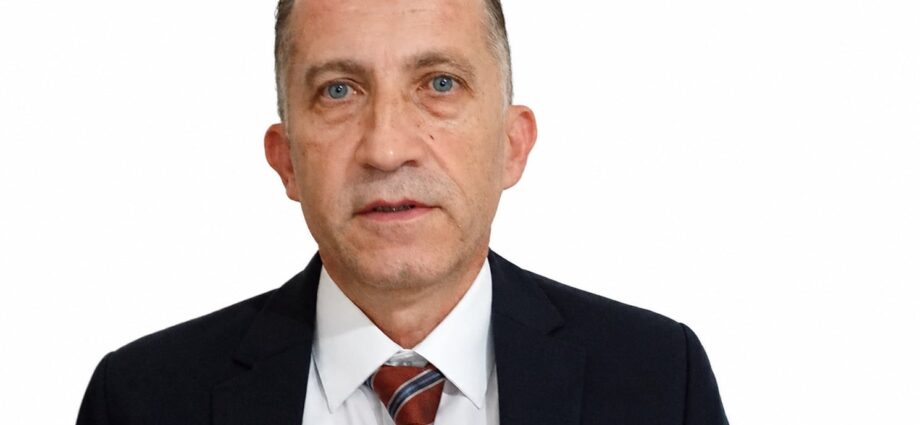
Selim Ibraimi- This week marked the 37th anniversary of the fall of the Berlin Wall (November 9, 1989), an event that led to the reunification of the two Germanys, the collapse of communism, and, subsequently, the dissolution of the Soviet Union (USSR) and Yugoslavia (SFRY).
New democracies emerged, but new challenges also arose, both in Europe and elsewhere. At the time, there was a sense of hope that tyranny had come to an end. Yet, looking at the current situation, things do not appear stable.
We face major challenges ahead, which carry the risk of global upheaval. As the world changes rapidly, the first question we ask is: who is telling us the truth?
In this context, it is important to remember those who played a key role in the fall of communism. Beyond economic, social, and military factors, the media and journalists also played a decisive role.
Prominent figures in American television journalism, such as Peter Jennings, Dan Rather, and Tom Brokaw, reported live from Berlin as citizens of the German Democratic Republic (GDR) streamed toward the Berlin Wall. I still remember those nights when, following the fall of the Wall, the aforementioned journalists reported from the Brandenburg Gate on the developments unfolding on both sides of Berlin.
In today’s world, with the development (and misuse) of artificial intelligence and various forms of communication, it has become extremely difficult to distinguish genuine news from fake news or other forms of disinformation.
For serious media outlets, it will become increasingly challenging to verify sources and report accurately on issues concerning freedom, war, or peace. Likewise, it will become harder for the audience to discern where the truth actually lies.
Nowadays, it is becoming ever more difficult to tell the difference between a good journalist and someone who uses artificial intelligence to generate news and reports, pretending to perform the work of a real journalist. Yet, this profession is not merely a task for a computing machine; it is a fundamentally human, intellectual, and professional endeavor.
As we witness a major shift in international politics and other arenas of geoeconomic competition, the journalistic profession risks being devalued, as other actors enter the sphere of news production and information gathering. In the coming decade, it will be extremely difficult to find genuine journalists from the “free world.” A different profile of journalist is emerging, as seen today in the coverage of the race between the U.S. and China over chip production, where journalists increasingly take on the role of spies.
It will be hard to find figures like Peter Jennings, Dan Rather, and Tom Brokaw, or a journalist like Christiane Amanpour. Within our European and Balkan context, the degradation of quality, independent journalism is set to continue.
With the exception of a few media outlets and journalists who operate with integrity, reporting will likely follow the global trend of declining professional journalistic standards.
In the Western Balkans, we will see forms of reporting that stoke ethnic and chauvinistic sentiments, while unregulated digital journalism may further fuel the grievances of parties entrenched in historical misunderstandings.
In the Albanian-speaking sphere, journalism was once a pioneer of fair and balanced reporting. Today, it has lost this role, as few journalists still uphold these standards.
In Kosovo, the situation is even more concerning, as even the basic standards of the Albanian language, both spoken and written, are not being respected. This phenomenon has also spread among some “journalists” working in the Albanian language in North Macedonia.
In Albania, meanwhile, we encounter other issues, such as the excessive use of foreign words across all media outlets and a decline in standards. In general, Albanian journalism is undergoing a crisis.
From another perspective, the new mode of digital reporting, if practiced professionally, with dignity and high standards, can serve to prevent wars, shed light on the human condition, and spark a revolution, ultimately contributing to future developments that benefit both democracy and humanity.
Can we find more journalists like the figures mentioned above? Can we educate or train others to follow in their footsteps? Every society has its positive and negative aspects. Ultimately, time will reveal what unfolds and who will speak the truth.
This article was written specifically for Portalb.mk. Publication rights are held exclusively by Portalb.mk and the author, in accordance with an agreement between them.