
Selim Ibraimi- A small Balkan country is preparing to join the EU. Montenegro, with a population of 630 thousand inhabitants, will soon be part of the EU. The Western Balkans-EU summit in Tivat, Montenegro, made it clear that this country is ready to join the EU. Although Podgorica is officially on the verge of joining, the rest of the countries in the region remain outside the union.
Critics from the Western Balkans say that the problem lies in Brussels, but the concrete steps taken by the member states of the union show that the remarks from the governments of the region do not hold water.
The EU is looking for new and easier solutions for Balkan governments that have concerns about meeting the EU’s requirements.
“The EU will seek new ways to speed up the membership process for six candidate countries from the Western Balkans at a future summit,” European Council President Antonio Costa said on Thursday.
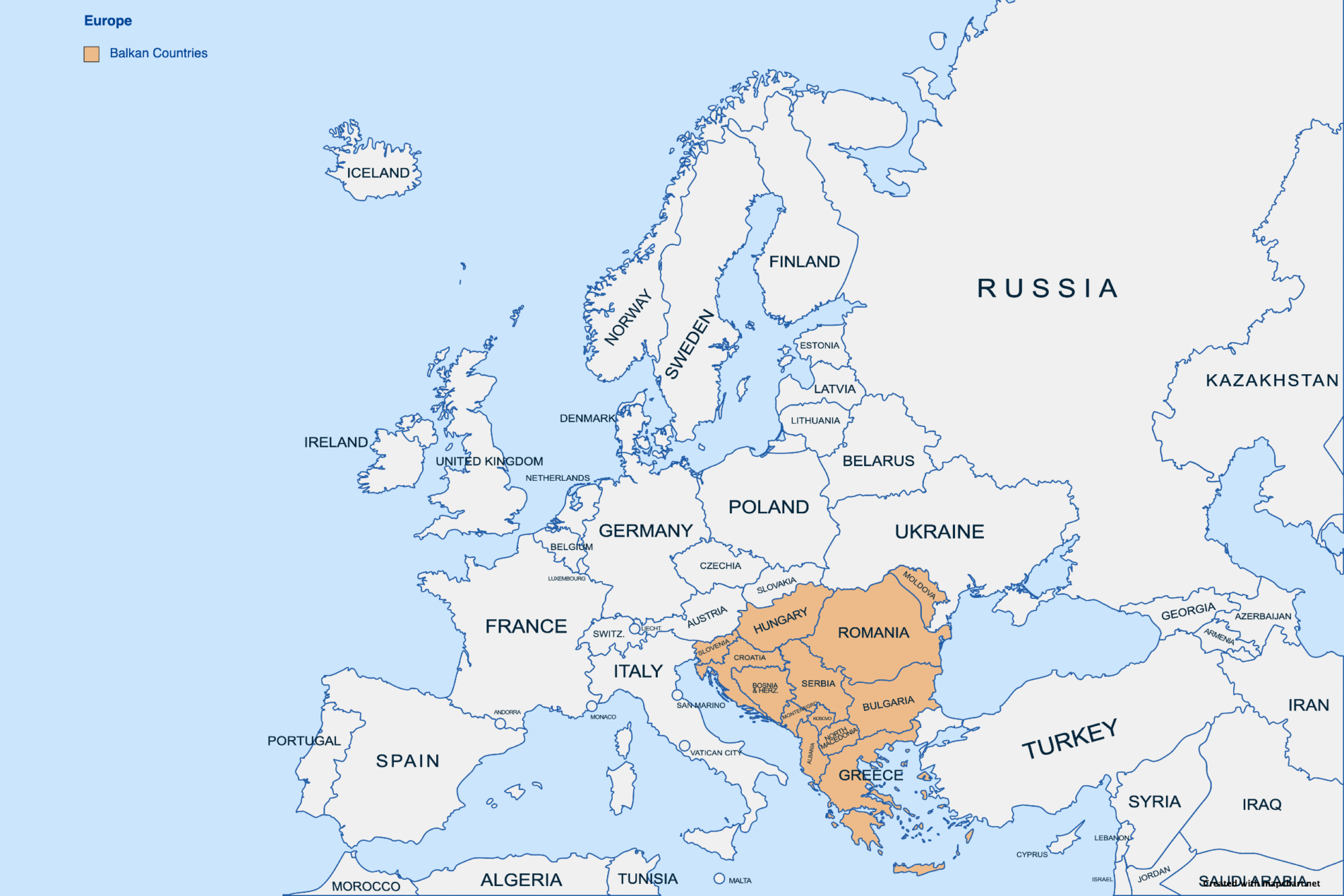
Bosnia and Herzegovina, Albania, Kosovo, North Macedonia, and Serbia have been seeking membership for years.
The regional countries have believed they can achieve their goals by failing to meet the criteria and, without merit, becoming part of the EU.
In view of these processes, the EU has recently tried to encourage reforms in the candidate countries, fearing the growing influence of Russia, China, and Turkey.
President Costa said, “If you want to increase trust between each other, this cannot be created with this feeling of frustration.”
On Friday, EU top leaders met in Tivat, Montenegro, to discuss the integration of the region.
“Montenegro is the most advanced candidate country in accession negotiations,” EU Enlargement Commissioner Marta Kos told Reuters.
“The strong leadership in the country has made important steps forward in terms of reforms, but there is still much work to be done. Some of the most urgent reforms are in the area of the rule of law and the judiciary.”
Meanwhile, Germany and France are taking stock of the situation in Europe, and have proposed a different path as we highlighted for the Western Balkan countries and Moldova towards EU membership, with easy access to the EU’s Common Market.
The two European governments signed a document calling for a new impetus in the EU enlargement process. France and Germany are calling for a new process of ‘gradual structured integration’ for EU candidate countries.
In all respects, it is an excellent idea that all Western Balkan countries should follow. If even this proposal is not enough for the Balkan countries, then this process can already be considered completed for some governments.
In this respect, some countries in the region may not yet be at the perfect level due to unresolved issues with other countries, such as North Macedonia with Bulgaria and Serbia-Kosovo relations.
In this context, initiatives from the EU are seen as a real and necessary incentive for Balkan countries that want to become members of the union. However, while Montenegro and Albania are getting ready for the EU, it is obvious that the rest of the Balkans have remained outside the union.
Serbia and North Macedonia continue to play the nationalist game. “The adoption of the agreed constitutional amendments remains the only way forward towards the official start of negotiations,” said Antonio Costa, President of the European Commission, during his recent visit to Skopje.
It seems that the government of Macedonian Prime Minister Hristijan Mickoski has welcomed the Franco-German proposal for ‘gradual integration’. He is against constitutional changes.
He said in a statement to the media regarding the proposal: “It includes all the Western Balkan countries. Not all countries are at the same level of the integration process, but it includes all six Western Balkan countries, and it is not related to the enlargement process, as both processes are taking place in parallel. Yes, that is correct.
Some parts of this plan mean that some, I would say, chapters will be closed, but there will also be some adjustments here in the coming period, so let’s see the final version, and then we can all discuss it.
But, in any case, it is a strong message from the European Union. The level of relations between the Western Balkans and the European Union is at a much higher level, and many more mechanisms and tools are being opened that we will use in the period ahead. Therefore, I am really pleased and inspired to implement more reforms.”
In North Macedonia and Serbia, despite some positive tones, there is still a great degree of skepticism. While the EU has never stopped the enlargement process in the Balkans, some North Macedonian officials have said that the EU will not expand in the Balkans, which is not true.
Kosovo remains a candidate country, but without a date, and very little reform has been done to convince the EU to start the association process. After Podgorica, Albania is the second country to join the EU by 2030. The entire process will depend on the reformist policy of the Rama government, the fight against corruption, and the rule of law. Senior EU officials this time were more direct towards the Serbian government and presidency about dual policies. “Their (Serbian) membership remains our priority and an important geopolitical investment,” said President Costa.
The EU is doing its job. It is seen that some regional governments, apart from participating and wanting European funds, do not even plan to make themselves look more like a normal European state. At this time, it will be useful to think about the steps forward and the future, because if the EU says it is ready for new agreements, the countries of the region should accept this willingness.
The article was written specifically for Portalb.mk. The publication rights are only owned by Portalb.mk and the author, according to the agreement between them.