
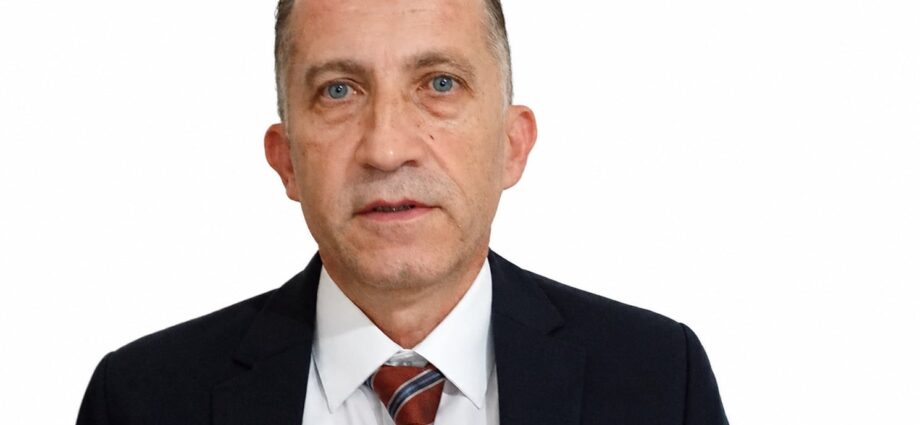
Selim Ibraimi- Elections in Bosnia and Herzegovina were a focus for Russia. The same applies to the elections taking place today in Serbia. Ahead of the parliamentary elections, Russian Foreign Ministry spokesperson Maria Zakharova stated that preparations for the vote are being conducted in accordance with existing constitutional procedures. “We expect the new Serbian government to continue its course toward equal and mutually beneficial cooperation with Russia.”
“As we have repeatedly emphasized, Serbia is a friendly state to us. The peoples of our countries are linked by a shared history, traditions, and culture. We value these ties and expect the new Serbian government to continue the policy of developing cooperation with Russia—cooperation that should be mutually beneficial and based on the principle of equality,” she said in a statement posted on X.
Over the last two centuries, Russian-Serbian relations have followed a consistent trajectory, regardless of whether or not conflicts have occurred. For more than a decade, Serbia has deepened its cooperation with Russia across all sectors. This cooperation has undermined the EU, as Belgrade has disregarded European states—not only regarding the war in Ukraine, where it has maintained an ambivalent stance, but also by strengthening ties with Russia in the energy and military spheres.
In this vein, Serbian President Aleksandar Vučić himself—prior to dissolving parliament—invited Ukrainian President Volodymyr Zelensky to Belgrade, aiming to project a positive image to the world.
Meanwhile, since the autumn of 2024—when student protests began—Russia has shown an uptick in its activity within Serbia.
There is apprehension in Russia that if the opposition, together with the student movement, were to emerge victorious and succeed in forming a stable government, Serbia might follow a path similar to Hungary’s—moving toward democratization and gradually distancing itself from Russia.
A report by the online magazine “Riddle Russia” states that in June 2026, Sergey Shoigu, Secretary of the Security Council of Russia, likened the movement among the youth to the 2014 “Euromaidan” events in Ukraine.
Furthermore, in August 2026, Russian diplomats continued to warn Serbian authorities about the potential for a “color revolution” to unfold following the elections. In September 2025, Russia’s Foreign Intelligence Service (SVR) accused the EU of inciting “color revolutions.”
Dmitry Medvedev, Deputy Chairman of the Security Council, became the latest high-ranking Russian official to accuse the West of interfering in Serbia’s electoral process.
Meanwhile, Serbia and Russia have continued their trade relations.
“Over 2,400 Russian companies, along with approximately 13,500 individual entrepreneurs, are currently registered in Serbia,” Serbian minister Nenad Popović told the Russian news agency TASS.
Regarding today’s elections, polls indicate that the Serbian Progressive Party (SNS) holds a narrow lead, while some observers have expressed concerns about the fairness of the electoral process.
The elections in Serbia serve as a crucial indicator of the direction the country will take leading up to 2030 and beyond.
Supporters of Vučić believe that, under his leadership, Serbia will become a powerful state while maintaining good relations with the EU, Russia, and China, as well as strong ties with the United States.
The American news agency AP reported that support for the student movement has grown. In independent polls, it stands very close to the Serbian Progressive Party (SNS).
On the other hand, the opposition and the student movement (the Student List) have a realistic chance of winning more seats in the Serbian parliament.
However, they lack a clear vision regarding the issue of Kosovo. Their stance remains aligned with that of Vučić’s party. Regardless of who wins and holds power in the coming years, Russia—as previously mentioned—has significant interests in Serbia and the region.
On October 16 of this year, Russian Foreign Minister Sergey Lavrov met in Moscow with Serbian Deputy Prime Minister Ivica Dačić. “The parties discussed the current state of Russian-Serbian cooperation and its future prospects in key areas.”
“The ministers underscored the fundamental importance of UN Security Council Resolution 1244 for resolving the Kosovo issue, as well as their mutual interest in maintaining stability in the region.” – states a post by the Russian Foreign Ministry on X.
In this regard, during a meeting of the UN Security Council in New York, the Deputy US Representative, Ambassador Tammy Bruce, stated that President Trump values and takes an interest in both Kosovo and Serbia, and desires peace, stability, and prosperity.
“The normalization of relations between the two countries is the only viable path forward. Our position regarding UNMIK has not changed. The mission has already fulfilled its purpose, and the Security Council should bring it to a close,” said Bruce.
In the context of the ongoing of Russian influence in Serbia and the Balkans, the strategic bond between Serbia and Russia has evolved over the last ten years from imperial patronage into a form of modern pragmatism.
Historically, this partnership has taken various forms. At the Congress of Berlin in 1878, Tsarist Russia became the protector of the Christian population in the Balkans—a stance that culminated in its support for Serbia and, subsequently, Montenegro. Over time, this support took on a different character. Russia backed Serbia in its efforts to defeat Austria-Hungary.
After 1918, the Soviet-Yugoslav connection continued uninterrupted. In the autumn of 1944, Red Army troops liberated Belgrade from German forces. Although the rift between Tito and Stalin in 1948 eventually severed Yugoslavia from the Soviet bloc, a resurgence of Russian influence in the Balkans—particularly in Serbia and Republika Srpska—has been observed since 1991.
Today, it can be said that Russian-Serbian relations are transactional in nature. Within the UN Security Council, Russia has exercised its veto power to block [recognition of] Kosovo. Meanwhile, perceptions of Serbia have begun to shift within the EU and the US—a change influenced by developments in the US and the EU itself, as well as by Serbia’s “condemnation” of the Russian aggression in Ukraine, even though it has never severed its ties with Russia.
Serbian-Russian military relations have persisted, with a focus on strengthening Serbia’s defense capabilities through the procurement of Russian military aircraft. In the energy sector, a Russian oil company (Gazprom Neft) holds a significant stake in the Serbian state-owned enterprise, NIS.
Serbia struggles to survive without Russian gas; therefore, regardless of who emerges victorious in the elections, the new Serbian government is likely to keep its relations with Russia almost entirely intact.
Despite these assurances, it remains in Russia’s best interest that no radical changes occur in Serbian policy. The aforementioned statement by the spokesperson for the Russian Ministry of Foreign Affairs should be viewed in this light.
This article was written specifically for Portalb.mk. Publication rights belong exclusively to Portalb.mk and the author, in accordance with an agreement between them.
Note: This article was published on the day of the elections in Serbia, held on October 25, 2026.